Loaf Pan and Muffin Tin Size Chart, with a Pan Converter
Switching pans is where quick breads and muffins go wrong. Below are the pan sizes, how much each holds, and where to start on bake temp and time. Two small calculators handle the math. The numbers come from the reference charts in my Fill the Case toolkit.
Loaf pan sizes
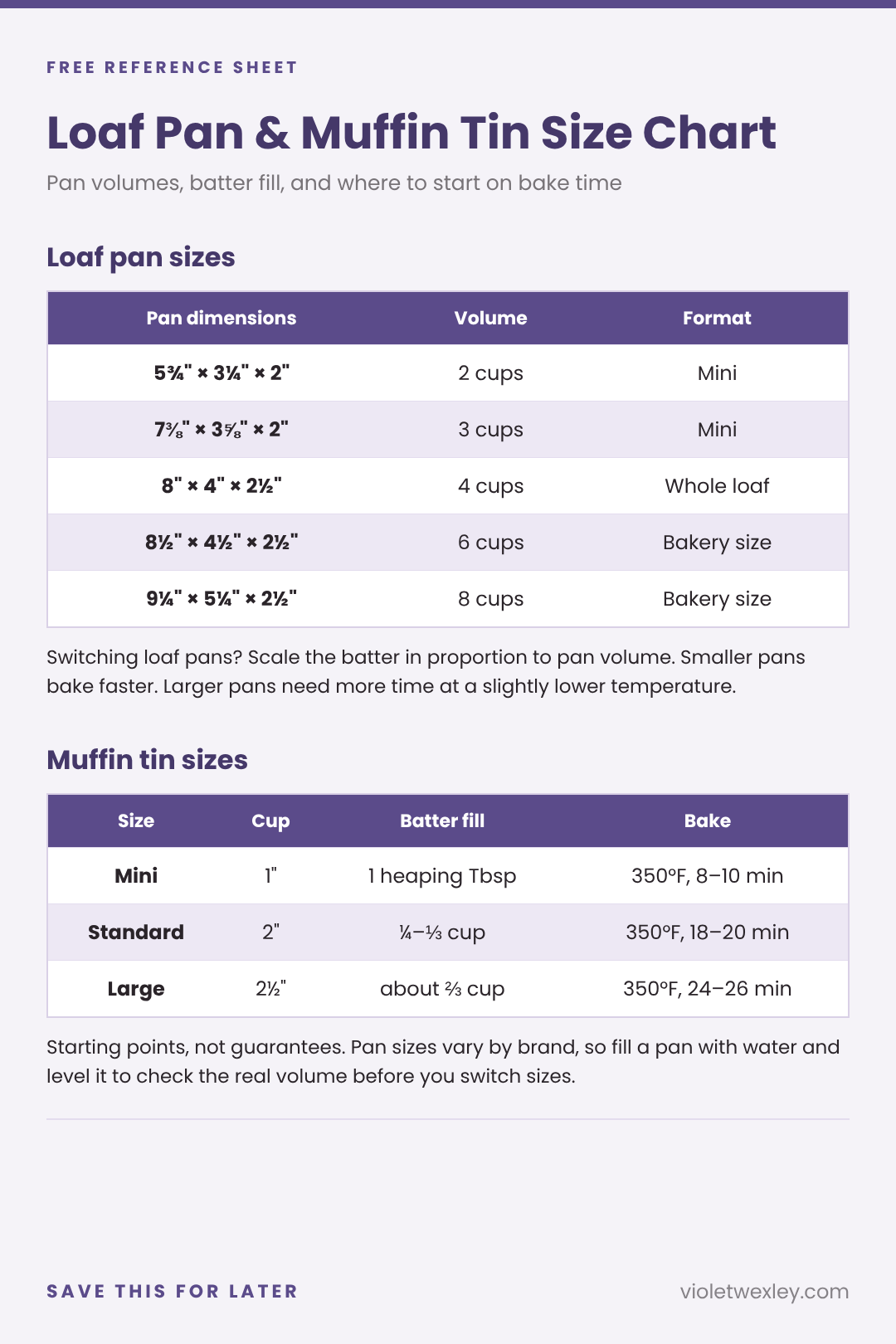
| Pan dimensions | Volume | Format | How it’s sold |
|---|---|---|---|
| 5¾" × 3¼" × 2" | 2 cups | Mini | Sold whole — smallest mini size |
| 7⅜" × 3⅝" × 2" | 3 cups | Mini | Sold whole — second mini size |
| 8" × 4" × 2½" | 4 cups | Whole loaf | Sold whole, for the customer to slice at home |
| 8½" × 4½" × 2½" | 6 cups | Bakery size | Sold by the slice |
| 9¼" × 5¼" × 2½" | 8 cups | Bakery size | Sold by the slice |
Muffin tin sizes
| Size | Cup diameter | Batter fill | Bake (temp, time) |
|---|---|---|---|
| Mini | 1" | 1 heaping Tbsp (~⅛ cup) | 350°F, 8–10 min |
| Standard | 2" | ¼–⅓ cup | 350°F, 18–20 min |
| Large | 2½" | about ⅔ cup | 350°F, 24–26 min |
Use these as a starting point and adjust for your own formula and oven.
Changing loaf pans? Scale the batter.
Batter scales with pan volume. Pick the pan your recipe was written for and the pan you want to use.
How many muffins will your batter make?
Enter the total batter, in cups. Counts are rounded down to whole muffins.
Pan sizes vary by brand. Before you switch pans on a formula, fill the pan with water and level it to check the real volume. Baking a partial tray of muffins? Fill the empty cups about ⅔ full with water so the pan doesn’t warp or smoke in a hot oven and heats evenly.
Want a recipe?
Join the list and the welcome email comes with one. After that, you get new manuals and the occasional opinion. The charts and tools on this site stay free either way.
You will get an email to confirm your subscription. The recipe arrives after you confirm.